Summary: Immersion language learning is widely recognized as the most effective path to true fluency. Instead of memorizing isolated grammar rules, you surround yourself with the language naturally. Let’s break down exactly how it works and how you can do it at home.
What is Immersion Language Learning?
Immersion language learning is the process of surrounding yourself entirely with your target language. Historically, the most common advice was to move to a country where the language is spoken natively. The idea is that constant exposure forces your brain to adapt, understand context, and eventually acquire the language organically.
However, in the digital age, you don’t need a plane ticket. With modern digital resources, podcasts, streaming services, and specialized applications, you can create a personalized immersion environment right in your living room.
The Science Behind Immersion
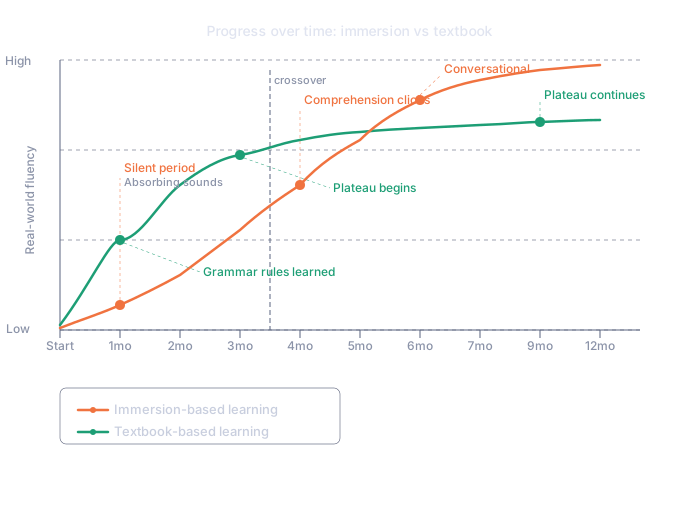
The human brain is wired for pattern recognition, not rote memorization. The foundation of immersion language learning rests on the input hypothesis coined by linguist Stephen Krashen. He suggested that language acquisition happens when we receive “comprehensible input”-content that is slightly above our current level of understanding.
When you engage in immersion language learning, your brain naturally deduces grammar rules, pronunciation nuances, and vocabulary usage through sheer exposure and contextual clues. It is the same process you went through as a child learning your native tongue.
Active vs. Passive Immersion
To succeed with immersion language learning, you need a mix of both:
- Active Immersion: Watching a show or reading a book where you are completely focused on understanding the plot, noting new words, and actively paying attention to the language structure.
- Passive Immersion: Having a podcast or native radio playing in the background while you cook or commute. This helps your brain get used to the rhythm, intonation, and pronunciation of the language, even if you aren’t understanding every word.
How to Start Your Immersion Language Learning Journey
Starting an immersion language learning routine might sound daunting, but it’s about building small, sustainable habits.
1. Build a Foundation First
If you are an absolute beginner, jumping straight into a complex novel will only cause frustration. Start with basics to get a feel for the vocabulary. Once you recognize a few core sentence structures, immediately start transitioning into native content.
2. Choose Content You Actually Enjoy
The biggest secret to immersion language learning is motivation. Pick a YouTube channel you’d watch in your native language, or a genre of books you love. If you love gaming, switch a game you already know well into your target language.
3. Use the Right Tools
Leveraging the right tools can accelerate your progress immensely. Fluly is designed specifically to optimize your immersion language learning journey. Instead of painfully looking up every word you don’t know, Fluly allows you to watch local and YouTube videos or read texts with instant translations and context tracking.
4. Implement Spaced Repetition
When you discover new words during immersion, you need a way to review them so they stick. Utilizing spaced repetition for vocabulary mined from your immersion content is the fastest way to build your vocabulary. Fluly automatically handles this by tracking words you tap and scheduling them for review in the exact sentence context you originally found them.
The Mass Immersion Approach
A popular subset of this philosophy is the Mass Immersion Approach (MIA). It emphasizes a massive volume of input before even attempting to output (speak or write). By listening and reading for hundreds of hours, you develop a strong intuitive sense of what “sounds right” in the language. When you finally begin speaking, your phrasing sounds far more natural compared to students who rely solely on textbooks.
To dive deeper into the differences and mechanics of the general immersion method, check out our post detailing What is the Immersion Method.
Conclusion
Immersion language learning is not a quick hack; it is a lifestyle adjustment. By consistently surrounding yourself with content you enjoy, slightly challenging your comprehension, and using tools to make the process frictionless, you will achieve fluency far more naturally and enjoyably than traditional methods.